


For decades, the “3,000-mile oil change” has been drilled into drivers’ minds as the ultimate rule of car maintenance. Quick-lube shops plaster it on their windows, mechanics recite it automatically, and anxious car owners dutifully schedule appointments every few months based on this supposed golden standard.
But here’s what the automotive industry doesn’t want you to know: this outdated advice is sometimes costing you hundreds of dollars annually and creating unnecessary waste.
Modern vehicles, advanced engine technology, and superior oil formulations have completely changed the game. Most cars today can safely go 5,000 to 10,000 miles between oil changes without any risk to your engine.


It Depends on Your Car — Not Just the Mileage
Most cars on the road today? They’re built better. Oils are engineered smarter. The old 3,000-mile rule just doesn’t fit anymore.
Depending on what you drive, you’re likely in the clear for 5,000 to 10,000 miles between changes. That’s a big shift from what we were told growing up — but it’s backed by tech, not tradition.
Rough Breakdown by Vehicle Type:
-
Everyday passenger cars: 7,500–10,000 miles
-
Luxury models: Sometimes even more
-
Performance engines: 5,000–7,500 miles
-
Older cars (think pre-2010): Stick to 3,000–5,000 miles
Where Did the 3,000-Mile Rule Even Come From?
Short answer? The 1970s.
Back then, engines weren’t as clean or efficient, and oils broke down fast. That old advice made sense for its time. But things changed. Engines got smarter. Oils got stronger. And yet, that dusty rule stuck around.
Why? Well, because it was good business. More oil changes meant more money for quick-lube shops and manufacturers. Simple as that.

So What Actually Determines When You Should Change Your Oil?
Let’s talk about what matters now.
1. Your Owner’s Manual Is the Law of the Land
Seriously — don’t skip it. The people who built your engine also tested it thousands of hours with specific oil types. Their recommendation isn’t a guess. It’s the most accurate number you’ll get.
2. The Oil You Use Changes Everything
Let’s keep this simple:
-
Conventional Oil: 3,000–5,000 miles
– Older cars, tighter budgets -
Synthetic Blend: 5,000–7,500 miles
– A middle-ground option -
Full Synthetic: 7,500–10,000+ miles
– High performance, longer life, better protection
Use what your manual recommends, and don’t cheap out just to save a few bucks. Good oil pays off long-term.
3. How You Drive Matters More Than You Think
If your daily routine involves short trips, stop-and-go traffic, or extreme temperatures — you’re driving in what’s called “severe conditions.” And that means you should probably be changing oil more often.
Here’s what counts as severe:
-
Driving mostly short distances (under 10 miles)
-
City traffic with lots of stops
-
Dusty roads or dirty environments
-
Hauling or towing heavy loads
-
Spirited (ahem, aggressive) driving
If any of that sounds familiar, you’ll want to follow the “severe service” schedule listed in your manual, usually 30–50% more frequent than average.
4. Let Your Car Tell You
Most modern vehicles have oil life monitoring systems. These aren’t just timers, they track how you actually drive, your engine temps, weather conditions, RPMs, and more.
So when that dashboard warning pops up telling you it’s time to change your oil… trust it.
What Happens If You Change Too Often (or Not Enough)?
Too Often:
-
You’re spending more than you need to
-
You’re dumping usable oil unnecessarily
-
You’re wasting time on a job that didn’t need doing
Not Enough:
-
Your engine suffers
-
Your warranty could be voided
-
You could face major (and expensive) repairs
The goal isn’t to guess. It’s to hit that sweet spot — and stay there.


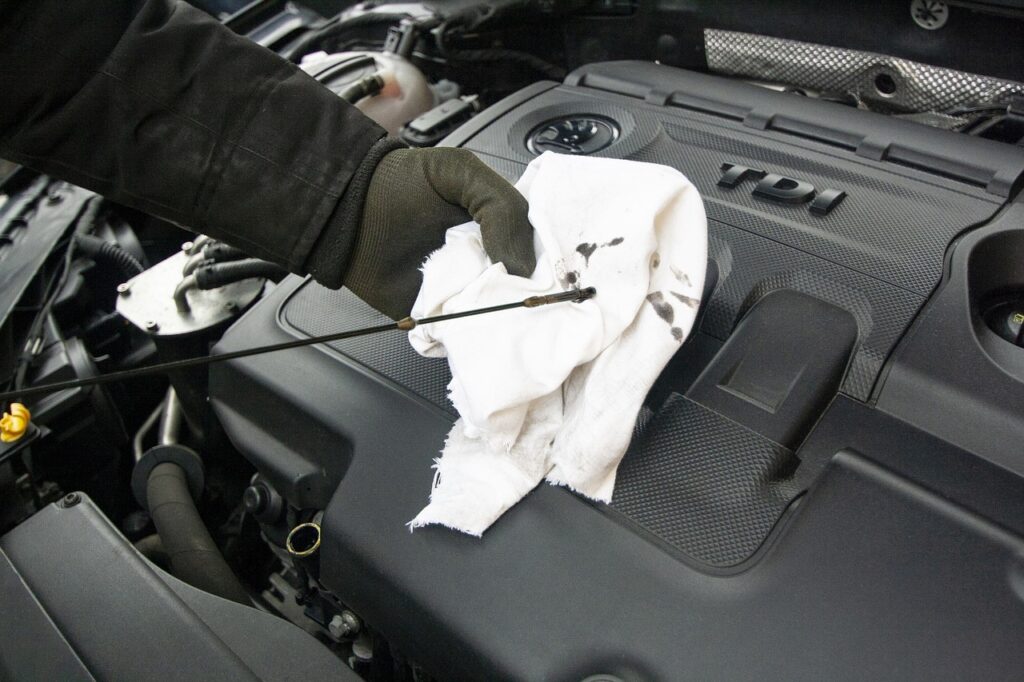
Want to Check Your Oil Like a Pro?
Don’t just watch your odometer. Keep an eye on your oil’s condition too.
Here’s what to look for:
Visually:
-
Black, sludgy, or gritty oil
-
Metal flakes (bad sign)
-
Constantly low oil levels (with no leaks)
Performance-wise:
-
Louder engine noise
-
Decreased MPG
-
Smoke from the exhaust
If you notice any of those signs, it might be time — even if you’re not at your mileage limit yet.
Bottom Line: Stop Trusting Stickers. Start Trusting Science.
Your car simply isn’t stuck in the 1970s. Today’s engines and oils are designed to go the distance. You’ll protect your vehicle better (and keep more money in your pocket) by following the facts — not the past standard.