


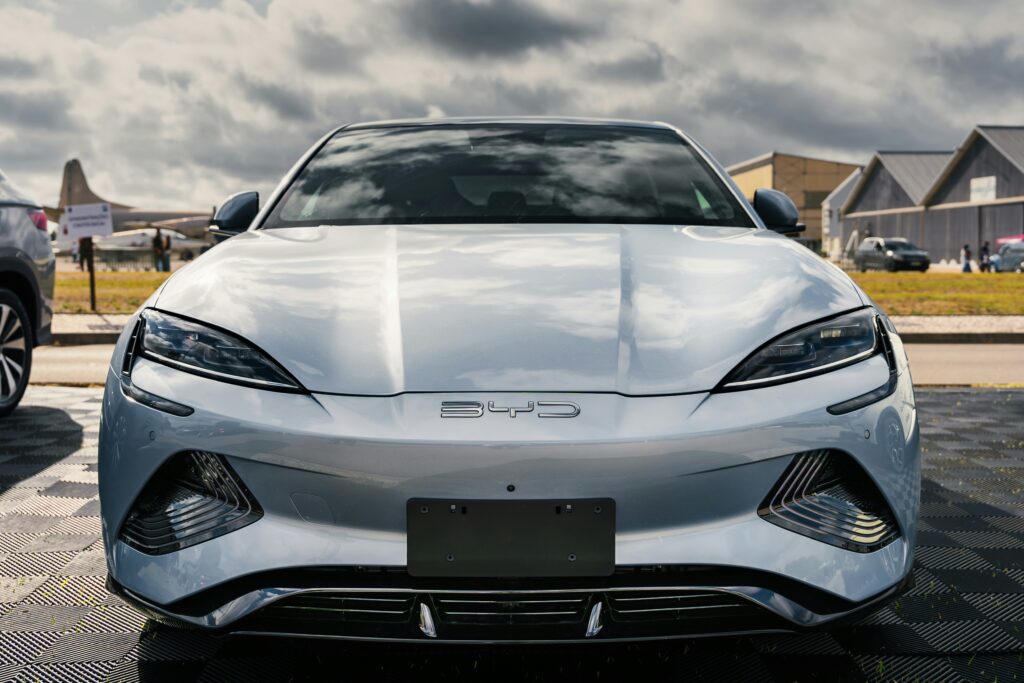
A revolution is underway in the automotive world, and it’s not coming from Detroit, Tokyo, or Stuttgart. It’s coming straight from Shanghai and Shenzhen. For decades, brands like Toyota, Ford, and Volkswagen dominated the conversation. But today, a new wave of Chinese automakers is gaining serious ground. Names like BYD, NIO, XPeng, and Li Auto are no longer just local powerhouses, they’re rapidly becoming global players, reshaping the automotive landscape with innovation, scale, and speed that few legacy brands can match.
So, what’s driving China’s rise in the global car market? And why should the world be paying close attention?
1. China Owns the EV Momentum
While legacy automakers are still navigating the transition from combustion to electric, Chinese brands have made EVs their playing field from the start.
-
BYD (Build Your Dreams), backed by Warren Buffett, is now the world’s top-selling EV manufacturer—surpassing Tesla in global EV sales in some quarters.
-
NIO has focused on the premium market with sleek design, innovative battery-swapping tech, and in-car AI.
-
XPeng is making headlines with cutting-edge autonomous driving systems and smart cockpit experiences.
China’s EV ecosystem is built for scale—from mining and refining critical minerals to battery production and vehicle manufacturing. This vertical integration gives them a cost advantage that’s hard to beat.
2. Going Global, Fast
Chinese manufacturers are no longer content with dominating their domestic market. They’re eyeing—and entering—key global markets with confidence.
-
BYD is expanding aggressively into Europe, Southeast Asia, South America, and even Australia.
-
NIO launched in Norway and is preparing to enter Germany, the Netherlands, and more.
-
MG, now owned by China’s SAIC Motor, has quietly built a strong EV presence in the UK and Europe.
These brands aren’t just exporting cars—they’re opening factories, building partnerships, and customizing offerings for local markets. And they’re doing it fast.
3. Innovation as a Core Strategy
Chinese automakers are redefining what “car innovation” means—not just under the hood, but in the entire user experience.
-
Battery Swapping: NIO’s Power Swap Stations let drivers exchange a depleted battery for a fully charged one in under 5 minutes.
-
Smart Cockpits: Brands like XPeng and NIO are integrating voice assistants, facial recognition, and AR displays as standard features.
-
Autonomous Tech: XPeng’s Navigation Guided Pilot (NGP) and other ADAS systems are competing head-to-head with Tesla’s Autopilot in functionality and user experience.
This innovation-first mindset, combined with fierce domestic competition, has made China a testbed for futuristic vehicle features.
4. Competitive Pricing with Premium Feel
One of the biggest threats to established automakers? Chinese brands offer a high-tech, well-designed product—at a lower price point.
Thanks to government support, local supply chains, and aggressive scaling, they can deliver more value for less. A BYD Atto 3, for example, offers premium styling and EV tech at a fraction of the cost of similar Western models.
In emerging markets, that price-performance advantage is proving hard to ignore.
5. The Geopolitical Factor
As Western automakers wrestle with supply chain disruptions and regulatory pressure, Chinese brands benefit from strong domestic alignment.
-
The Chinese government has made EV development a national priority.
-
Massive investments in infrastructure—like charging stations and battery tech—are paying off.
-
Export-friendly policies and trade agreements (like those with ASEAN countries) are easing market entry.
This synergy between public policy and private innovation gives Chinese automakers a long runway for global expansion.


Final Thoughts
For a long time, “Made in China” in the auto world flew under the radar. But that’s changing—fast.
Today, brands like NIO, BYD, and XPeng are turning heads with bold design, forward-thinking tech, and global ambition. They’re not just keeping up—they’re helping define what the future of driving looks like.
If you haven’t been paying attention, now’s the time to tune in.
What do you think—will these rising EV players shape the next decade of driving, or will legacy brands rise to the challenge? Let me know in the comments.