

Horsepower Isn’t Everything: Why Torque Matters More Than You Think
Walk into just about any car dealership, and chances are you’ll hear salespeople leading with horsepower figures. “This one’s got 500 horsepower,” they’ll say, expecting that number alone to seal the deal. But while horsepower tends to steal the spotlight, it’s torque that’s doing the real work—and that’s why torque matters more than most people realize.
If horsepower is the headline act, torque is the force behind the scenes—responsible for how quickly a car gets off the line and how strong it feels under acceleration. Both matter, but torque often doesn’t get the recognition it deserves.
What Actually Is Torque?
Torque is a measure of rotational force and is more specifically defined as the amount of force required to rotate an object around an axis. In simple terms, it’s the twisting force that gets your wheels turning and your car moving.
Picture yourself trying to loosen a stubborn bolt with a wrench. The force you apply to twist that wrench? That’s torque. Now imagine your car’s engine applying that same rotational force to the wheels, but with thousands of times more power.
Torque is often considered the “grunt” of an engine, as it determines the engine’s ability to perform work. It’s what you feel when you press the gas pedal and get pushed back into your seat—that immediate surge of forward motion.

Horsepower: The Speed Demon
Power is how rapidly work is accomplished. If torque is about muscle, horsepower is about speed and endurance. Mathematically, horsepower equals torque multiplied by rpm (specifically: HP = Torque × RPM ÷ 5,252).
High horsepower is what allows sports cars to continue accelerating at higher speeds for overtaking on expressways or track performance. It’s why a Corvette Z06 can hit 189 mph—all that horsepower keeps pushing the car forward even when wind resistance tries to slow it down.
Why Torque Matters More in Real Life
Horsepower reflects how fast a car can ultimately go, but torque is what delivers immediate acceleration and usable power in real-world driving.
City Driving Reality Check
A car’s peak horsepower is far less noteworthy if you’re a city dweller confined to 30-mph speed limits. In stop-and-go traffic, a vehicle that makes a lot of torque will feel punchier than one with an engine that is tuned to optimize power.
Peak torque, however, occurs much earlier in the rev range—generally between 2000 and 6000 rpm—which means you’re more likely to experience maximum torque in normal driving than peak horsepower.
The Towing and Hauling Champion
Need to pull a boat or move furniture? Torque is your best friend. The Ram 3500 with the Cummins diesel engine makes 1,075 pound-feet of torque. This allows it to tow an incredible 37,090 pounds. Try doing that with a high-horsepower sports car—you’ll be disappointed.
Vehicles with high horsepower don’t necessarily have high torque, and vice versa. That’s why diesel trucks can pull massive loads despite having relatively modest horsepower numbers.
Electric Speed: No Lag, All Launch
Electric vehicles have completely changed the torque game. Conversely, maximum torque in electric vehicles is achieved the moment you floor the throttle, hence instant torque.
With fuel-powered cars, the maximum twisting force or peak torque can only be achieved at certain engine RPMs, differing from model to model. But electric motors? They deliver all their torque instantly, from zero RPM.
This is why a Tesla Model S can embarrass supercars off the line. The Tesla Model S P100D has been breaking records left and right recently thanks to its monstrously quick 2.28-second 0-60 time. It’s not just about the horsepower—it’s about having maximum torque available the instant you press the accelerator.
Real-World Electric Advantage
Electric vehicles also behave a bit differently when it comes to torque. Unlike traditional engines, which build torque gradually, electric vehicles deliver maximum torque instantly from a standstill. This makes electric vehicles feel incredibly quick off the line, even if their horsepower figures don’t seem impressive on paper.

When Horsepower Takes the Crown
Don’t get us wrong—horsepower absolutely has its place. If your goal is to win drag races or cross Germany as fast as possible, horsepower is everything.
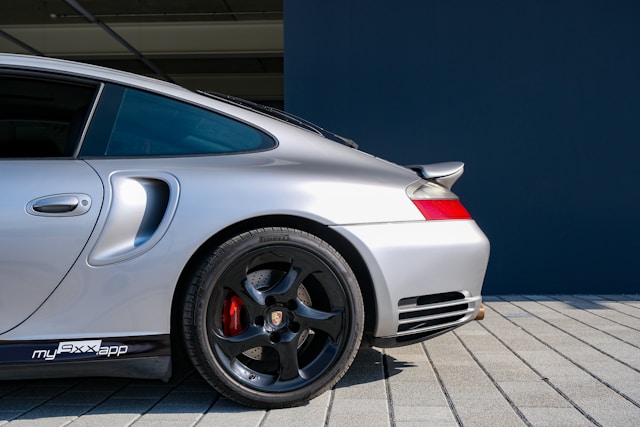
But if you’re a performance enthusiast looking to tackle twisty roads or a race track, horsepower is key. The Porsche 911 Turbo S boasts 640 horsepower and it can accelerate rapidly and maintain high speeds through curves.
Horsepower shines when you need to:
- Maintain high speeds on highways
- Overtake slower vehicles confidently
- Achieve maximum top speed
- Sustain performance over time
Why Torque Matters: The Formula That Connects Everything
Here’s the beautiful thing about this debate: The hypothetical battle between horsepower vs. torque is misleading. Since horsepower is calculated from torque, it’s not an either/or question.
The magic formula: Horsepower = Torque × RPM ÷ 5,252
This means they’re intrinsically linked. To make more power an engine needs to generate more torque, operate at higher rpm, or both.
The Bottom Line
Torque and horsepower work together, but they are not the same. Torque is about strength, while horsepower is about speed. One helps you launch, the other keeps you moving fast.
For most drivers, torque delivers the everyday driving experience you’ll actually notice and enjoy. It’s the difference between a car that feels sluggish in city traffic and one that responds instantly to your inputs. It’s what makes merging onto highways effortless and hill climbing a non-event.
Horsepower gets the glory, but torque does the work. And in our daily driving lives, that work matters more than the bragging rights.
So next time someone tries to impress you with horsepower numbers alone, you’ll know to ask: “But what about the torque?” Because now you can see why torque matters sometimes even more than horsepower.
What is your reaction?